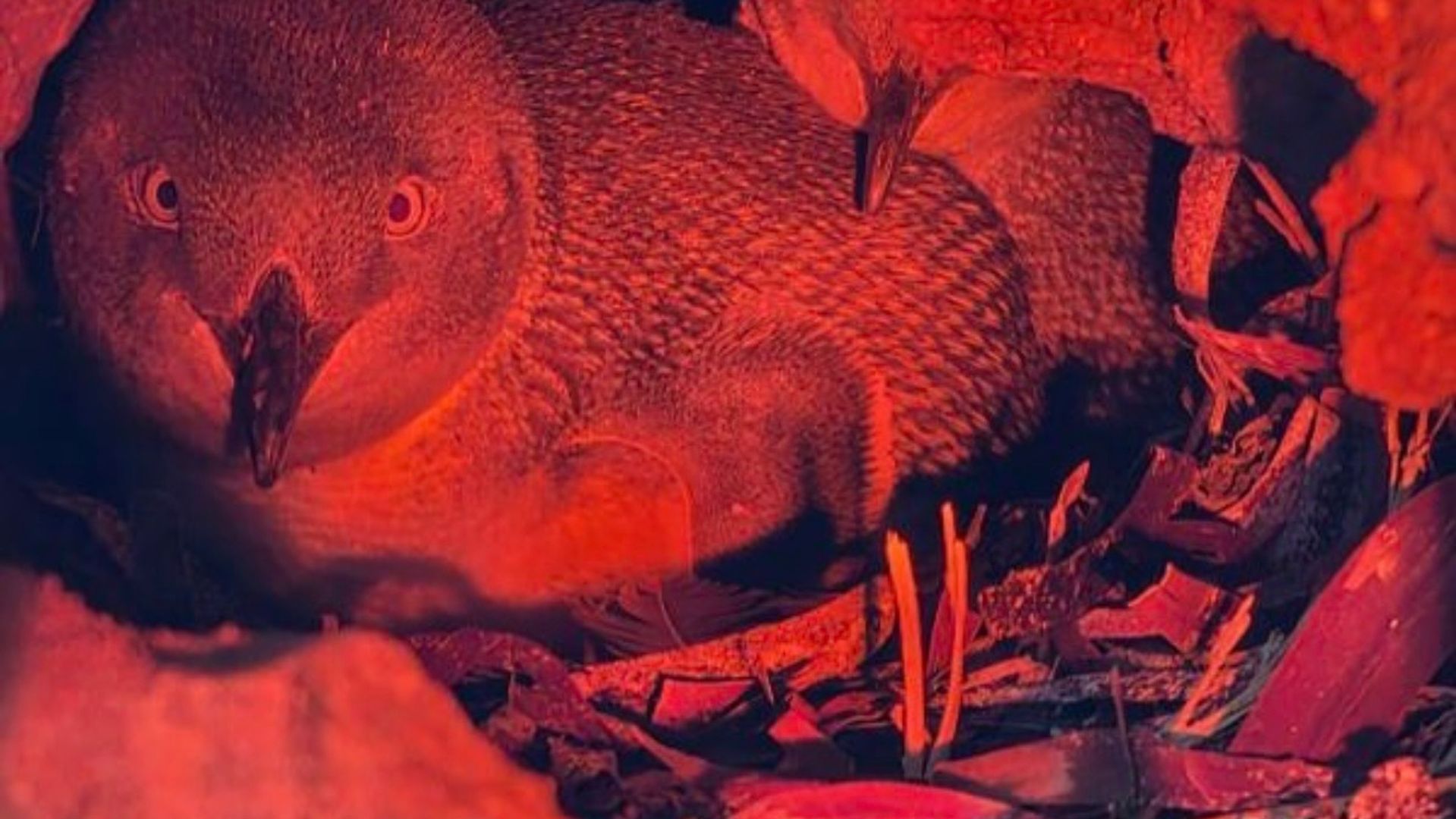
At Rumi on Louth, conservation is not just a value, it is embedded in how the island is managed, developed, and experienced. One of the most meaningful collaborations supporting this vision is our partnership with the Bird Laboratory at Flinders University, who have been conducting long-term research into the behaviour and wellbeing of Australia’s little penguin populations.
This research forms part of a broader international program studying bird ecology across multiple regions including Australia, Austria, Papua New Guinea, Fiji, and the Galápagos Islands. Within South Australia, the primary focus has historically been on Granite Island, with data collected since 2012. Rumi on Louth’s involvement has expanded this work by providing a second, contrasting colony at Louth Island, strengthening the overall dataset and offering valuable comparative insights.
What Was the Research About?
The Flinders University PhD project investigated how individual personality traits influence the survival, stress tolerance, and overall fitness of adult little penguins. Specifically, the research focused on three key behavioural traits:
- Boldness – how penguins respond to perceived threats
- Exploration – how willing they are to approach new or unfamiliar stimuli
- Aggressiveness – how they respond to social or territorial challenges
The overarching aim was to understand how these traits interact with physiological stress responses, foraging behaviour, and health, and whether certain personalities are more resilient in the face of environmental change and human disturbance.
How the Study Was Conducted
Over two separate field visits to Louth Island, researchers located and monitored active penguin burrows, carried out behavioural assessments, and collected biological samples. These included:
- Boldness tests, simulating human nest intrusion in a safe and controlled way
- Exploration tests, using novel objects monitored via infrared cameras
- Aggressiveness tests, using playback calls to simulate social encounters
- Stress and health data, including body condition measurements, faecal samples for hormone analysis, and feather samples for diet and foraging insights
This data was combined with long-term records from Granite Island, allowing researchers to assess how consistently individual penguins displayed certain traits over time, and how those traits related to stress and ecological outcomes.
Key Findings and Outcomes
Although full statistical analysis is still underway, early findings reinforced several important insights:
- Little penguins are highly sensitive to environmental fluctuations, particularly changes in prey availability driven by climatic events such as marine heatwaves and drought.
- Individual personality traits appear to play a significant role in how penguins cope with these pressures.
- Bolder or more exploratory individuals may be better equipped to adapt to changing food sources or habitats, while more cautious individuals may be more vulnerable to disturbance.
- Behavioural differences also influence how penguins tolerate human presence, which has direct implications for tourism, research activity, and coastal development.
In essence, the research highlights that conservation cannot treat wildlife populations as uniform. Behavioural diversity matters, and understanding it is critical for long-term survival.
What This Means for Rumi on Louth
For Rumi, this collaboration delivers both ecological and operational value.
Throughout construction and ongoing operations, the Bird Lab provides specialist advice on how to minimise disturbance to penguins and other shorebirds. This includes guidance on timing of activities, site access, lighting, noise, and habitat protection. Alongside BirdLife Australia’s recommendations, this ensures that the island’s ecological footprint is actively managed and continuously refined.
The research will also help determine whether stress levels in the penguin population are primarily driven by external pressures (such as climate and human activity) or by natural variation in resilience between individuals. This distinction is critical in shaping future management strategies — whether the focus should be on reducing stressors, or on protecting particularly vulnerable individuals or subpopulations.
From an educational perspective, the findings provide a powerful storytelling platform. Guests are not simply visiting a private island — they are staying within a living conservation environment where real scientific research is contributing to broader ecological understanding. This strengthens Rumi’s role not just as a luxury destination, but as a steward of the Spencer Gulf ecosystem.
A Broader Contribution to Conservation
Beyond Louth Island, the data collected feeds into a wider body of research on Australian marine bird populations. It offers insights into:
- Food availability and ecosystem health in the Spencer Gulf
- The impacts of climate variability on seabird behaviour
- How behavioural traits influence resilience across species
Ultimately, the Flinders University program reinforces a key principle of modern conservation: protecting wildlife is not only about habitats and numbers, but about understanding behaviour, stress, and adaptability in a rapidly changing world.
For Rumi on Louth, this partnership is both a responsibility and a privilege - ensuring that luxury tourism and conservation can coexist meaningfully, backed by science rather than assumptions.